Indigenous Christians in West Papua are calling on the new Indonesian government to drop plans to resume a controversial resettlement program that could see native Papuans further marginalized in their ancestral homeland.
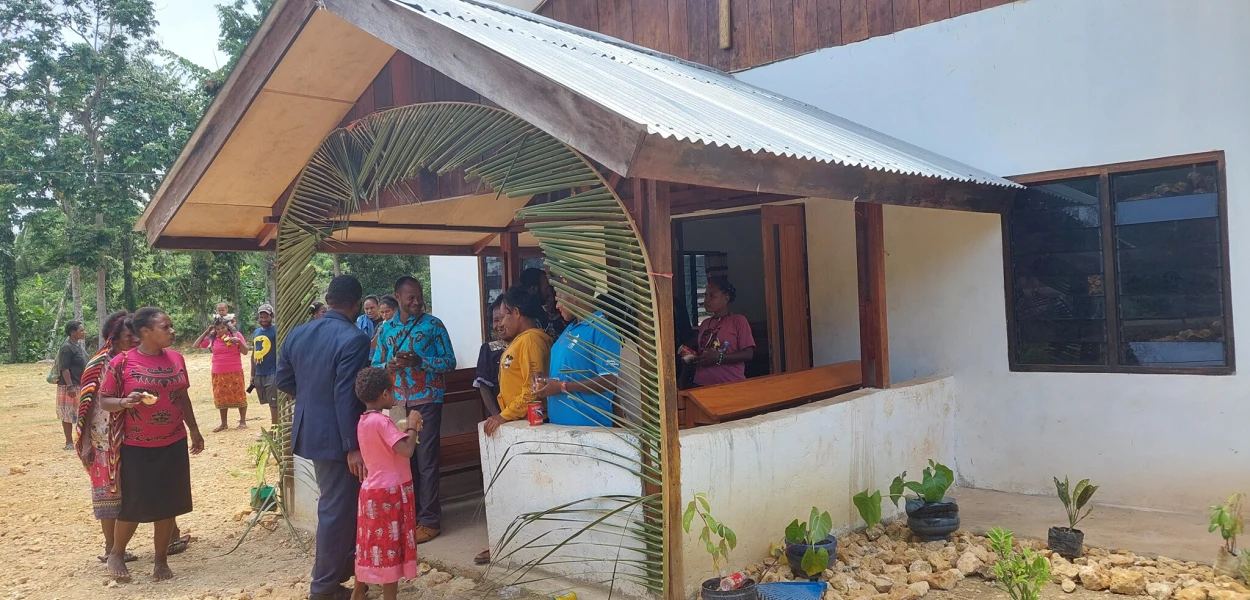
West Papuan Christians have reacted with dismay to an announcement by the newly elected government of President Prabowo Subianto that it plans to begin a new resettlement program in West Papua. The majority Christian indigenous people see the move as an attempt to destroy the culture of West Papua – the easternmost part of Indonesia. Prabowo – who was implicated in atrocities in West Papua in the 1990s – won the country’s presidential election in February and took power in October.
History of dispossession
West Papua is rich in natural resources, boasting large gold and copper deposits and tropical forests. To secure control over these resources, successive Indonesian governments have subjected the region to military occupation. This is still ongoing, and military operations have led to tens of thousands of West Papuans being displaced. Furthermore, hundreds of thousands of non-Papuans have resettled in the area, as Indonesia has sought to subjugate it. CSI highlighted the dispossession of the indigenous people in a statement to the United Nations Human Rights Council in March 2024.
The resettlement or transmigration program started under the former Dutch colonial government and promoted the migration of people from densely to more sparsely populated areas of Indonesia. After Indonesia gained independence in 1949 it continued the program, expanding it to include West Papua which it annexed in 1962. Transmigration to West Papua only stopped when Indonesia granted West Papua special autonomy in 2001. Under the program hundreds of thousands of people from other parts of the country settled in West Papua, completely altering the region’s demography.
On October 21, the Indonesian transmigration minister, Muhammad Iftitah Sulaiman Suryanagara, announced that President Prabowo had given instructions for a new transmigration to West Papua. He said the aim was “to ensure that Papua truly becomes an integral part of the Unitary State of the Republic of Indonesia in terms of its welfare, national unity, and in a broader context.”
Churches raise alarm
But Papuan Christian communities fear the further loss of their lands and identity. UCA News, a Catholic news agency reporting on Asia, reported that the West Papua Council of Churches and a group of Catholic priests had on November 11 issued an appeal against the planned resettlement and the creation of 2 million hectares of new rice fields. The appeal warned that “land acquisitions by Indonesian and foreign firms are leading to the destruction of tropical rainforests, biodiversity, and indigenous lands.”
According to the Catholic Fides news agency, the Council of Churches said that instead of conducting a new “colonization” the government should focus on meeting the needs of the local population. “Papuans need education, health care, social welfare and development,” Fides quoted the Council as saying.
The religious leaders warned that the program would worsen existing social problems as well as tensions between native Papuans and migrants from other parts of Indonesia.
Cultural survival threatened
An indigenous priest, Father John Bunay, spoke of an Indonesian government attempt to destroy the existence and culture of Papuans, UCA reported.
“There are so many migrants coming to Papua. There has been a seizure of living space from the indigenous Papuan people by non-Papuans,” he said.
The planned transmigration has also met with international criticism. In a statement, International Parliamentarians for West Papua (IPWP) noted that rather than increasing the wellbeing of Papuans, transmigration had led to income and wealth inequality.
In tandem with transmigration policies, forced displacement and the effects of conflict have driven tens of thousands of native Papuans from their homes. “Over 79,000 Papuans remain internally displaced and unable to return to their homes,” the IPWP pointed out.
Resuming transmigration to West Papua would represent “a severe threat to West Papuan land rights and cultural survival,” the statement said.
Preparing for the worst
Meanwhile, CSI’s local partners in West Papua are bracing themselves for a new influx of Indonesian settlers. “We have started holding discussions regarding how to deal with transmigration issues,” they wrote. “For example, there will be land confiscation, job opportunities will be lost, violations of human rights are likely to increase…”
CSI’s partners also expect to see Islam playing a more prominent role as people arrive from other parts of Muslim Indonesia. “There will be many mosques, prayer rooms and Islamic foundation schools in Papua,” they noted, and expressed concerns for the future of Christian education in the province. Their response would be “to pray and persevere,” they said.
VIDEO – CSI at the UN: West Papuan indigenous people face racial discrimination