The 13th-century Katoghike Holy Mother of God Church in Yerevan. The church was nearly demolished by the Bolsheviks in 1936, but was preserved after local protests.
Guest Commentary by John Eibner
This commentary originally appeared as a post on X.
In the 1920s, Moscow-backed Bolsheviks created a “Free Church” movement to undermine Armenia’s Apostolic Church—the nation’s strongest bulwark.
Today, Prime Minister Nikol Pashinyan is following the same playbook: co-opt weak clergy, arrest loyal bishops, weaken its financial base, and strip the Church of its role as defender of Armenian Christian nationhood.
Then it was communist control; now the militarily-defeated Armenian authorities are meeting Turkish-Azerbaijani conditions for an Islamist capitulation treaty. Same strategy, different masters.
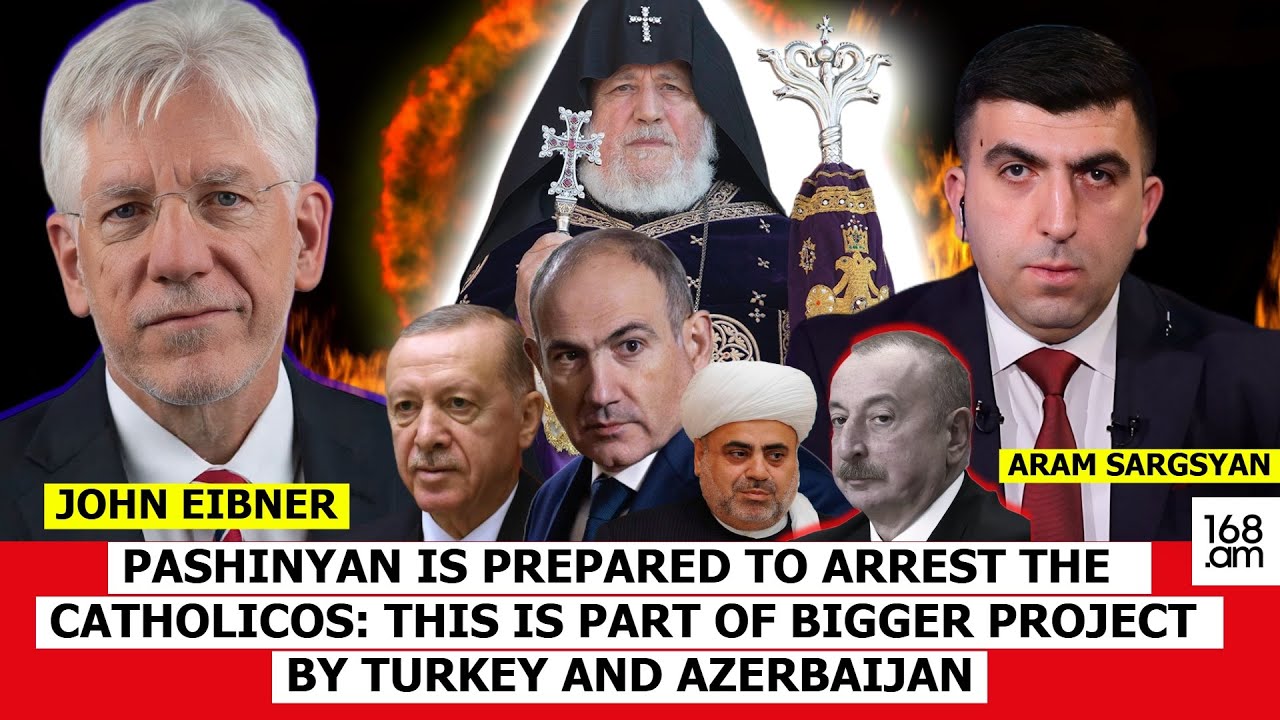
This subject arose when the reporter Aram Sargsyan of 168 News asked me about precedents for the current state-sponsored persecution of the Armenian Apostolic Church.
There is more to say: One century ago, it was not Ankara but Moscow that sought to eliminate Armenia’s 1,700-year-old Church as an autonomous factor in Armenian affairs.
The first Republic of Armenia had just been absorbed into the Soviet Union, but the Church remained a venerable institution, uniting Armenians around the country and the world.
The “Free Church” movement” was a 1920s era Bolshevik-sponsored “reform” group aimed at sabotaging the Armenian Apostolic Church from within.
“Free Church” clerics promised spiritual revival. In reality their role was to weaken the institution.
The ultimate aim of the Bolshevik persecution of the Church was to atomize the Armenian nation and render it incapable of independent political agency.
Success on this front would hasten Christian Armenia’s absorption into an atheistic Moscow-controlled communist society.
There was no shortage of Armenian communists and fellow travelers for the implementation of Moscow’s agenda.
The “Free Church” movement was made up of a strange mixture of Armenian churchmen: idealistic modernizers, ambitious opportunists, impoverished parish priests, and morally compromised and blackmailed clergy.
The glue that held them together was material and moral support from the Bolshevik authorities, the backing required to stand in opposition to the Catholicos and the Church’s Supreme Spiritual Council.
Their purported grievances were conveyed through Armenian state and party organs – not unlike the role played by Armenian state media and ruling party-controlled platforms today.
Moscow provided the “Free Church” leadership with its own press organs, while suppressing those of the legitimate Church leadership.
While Pashinyan’s “Church of Real Armenia” is a project in progress, history suggests its life-span will be limited. By the early 1930s the “Free Church Brotherhood” had served its purpose and was discarded by the Soviet authorities. It withered away and died, and the Armenian Apostolic Church survived.
Today, the removal of Catholicos Karekin II is sought under the guise of “reform” and “revival.” But this campaign and its goals differ little from those of the Bolsheviks.
The biggest difference is that the master is not communist Russia, but Islamist, neo-Ottoman Turkey.