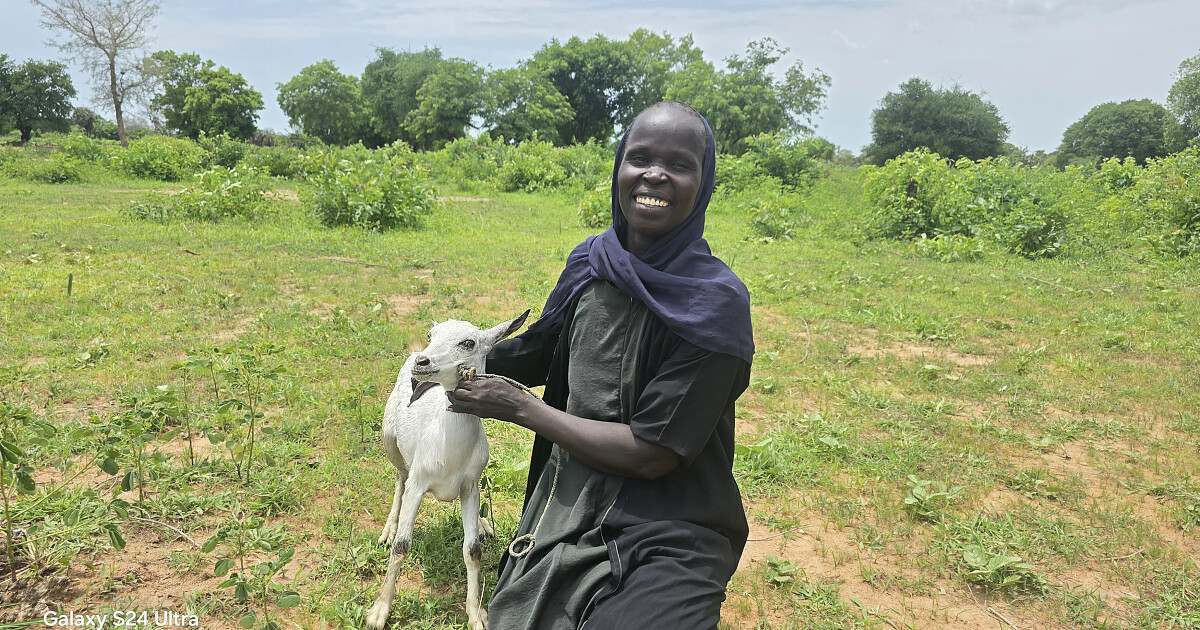
Abuk Machar Tong now farms land in South Sudan. csi
Abuk Machar Tong is among more than 160,000 people CSI has helped free from slavery in Sudan over the past 30 years through partnerships with local communities.
Now aged 40, Tong had been captured in 1998 from her home village of Malek Alel, situated in the Rum Aker area of Aweil East County within Northern Bahr el Ghazal state of South Sudan.
Armed men arrived and took her, Tong recalled. She said the militia set fire to houses in her area, destroyed food stores and fed the people’s maize to their horses.
Her captors forced her to walk on foot toward Sudan while they rode horses; one of them hit her with a stick to keep her moving. She was around 12 years old and feared she would not survive.
Raped, scolded and beaten
On the journey, Tong was raped by two of the men, who told her never to speak of it once they reached Sudan.
She was then held as a slave in Fula, the capital city of West Kordofan State in Sudan, by a man identified as Mohammed Khalid.
In Fula, Tong was forced to weed a garden and milk cows on Khalid’s farm. She said she was scolded and beaten for taking breaks, even when she was exhausted.
After 28 long years, an Arab retriever met Tong at a well, told her to put down her water container and said they were heading to South Sudan. He told her she would see how people live in South Sudan and take part in farming there.
After arriving in South Sudan, Tong realised that her rescue was an answer to her prayers. She and other survivors received starter kits containing basic supplies to help them rebuild their lives and support themselves after their release.
“In the harsh environment in Sudan, death is very close,” she said, thanking CSI for saving her life.
History of enslavement in Sudan
The enslavement of South Sudanese dates to Sudan’s civil war, fought from 1983 to 2005. Islamist militias killed or abducted large numbers of people in that region during the fighting, taking captives north.
Militias of armed Arab fighters, with support from the government in Sudan’s capital, Khartoum, targeted non-Muslim communities in South Sudan for capture during that period.
People held in slavery suffer forced work, physical punishment and near-starvation, treatment aimed at erasing their culture, identity and faith. Enslaved people are given Muslim names, forced to pray and attend mosque, and killed if they resist.
Slave raiding ended in 2005, but the peace agreement that stopped it did not include a path to repatriation for people already enslaved.
Read more about CSI’s work in South Sudan and Sudan here.